
5 stars reviews from dentists all around the world ★ ★ ★ ★ ★
The CLEAR Institute · Clinical blogThe reads that make you
 Practice growth Latest

















The reads that make you
a better clinician.
Treatment planning breakdowns, mechanics deep-dives, and honest takes on what actually makes aligner treatment work.
Practice growth LatestClear aligner treatment is too expensive
When a patient says clear aligner treatment is too expensive, the instinctive response is often to defend the price. The better conversation starts by helping the patient understand the problem, the value of treatment, and the consequences of waiting.
Read the full article Aligner mechanics
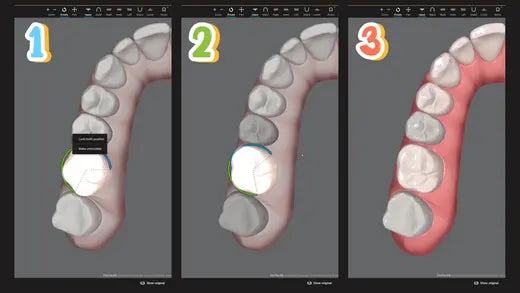
Should you fix red occlusion in your virtual setup? Think twice.
Red occlusion in ClinCheck does not always mean something is wrong. Learn why unnecessary vertical movements appear in clear aligner planning and when leaving them alone is the smarter clinical call.
Treatment planning
A tasting guide to cephalometric angles (SNA, SNB, ANB, IMPA)
Cephalometrics does not need to be complex to be effective. Dr. Reinhardt breaks down SNA, SNB, ANB, and IMPA using a practical, clinician-focused approach to orthodontic diagnosis.
Treatment planning
The great clear aligner consensus (2025)
Do aligners work as well as braces? An international group of orthodontic experts came together to settle the long-standing questions about clear aligner therapy. Here is what the evidence actually says.
Treatment planning
5 clear aligner misleading myths
Even in 2025, persistent myths quietly shape how dentists approach clear aligner therapy. Some are outdated. Others were never accurate. Here is a direct look at five of the most common ones.
Practice growth
Dentists deserve to thrive: embracing the business behind the smile
Most dentists do precision clinical work while simultaneously running a complex business. The ones who thrive are the ones who stop treating those two things as separate problems.
Practice growth
Clear aligner compliance: decoding patient behavior
The effectiveness of clear aligners depends entirely on patient compliance. Understanding what drives it and what breaks it is one of the highest-leverage skills a dentist can develop.
Practice growth
Less stress with clear aligner success
Embracing clear aligners can mean less clinical stress, more scheduling flexibility, and a practice that sustains you rather than drains you. Here is what that shift actually looks like.
Treatment planning
The AI transformation in clear aligner therapy
AI-assisted diagnostics and 3D printing are changing how aligner therapy is designed and delivered. Here is where the technology stands today and what it means for your clinical decisions.
Practice growth
The key to clear aligner success: empowering your dental team
Clear aligner integration is not a solo project. The practices that scale their aligner volume fastest are the ones that train the entire team, not just the doctor.
Practice growth
15 patient consultation tips to maximize clear aligner success
Patient engagement at consultation is the single biggest factor in aligner treatment success. These fifteen strategies help you communicate more clearly and improve case acceptance without scripting.
Practice growth
Bringing the A.R.T. back in dentistry: align, restore, transform
Clear aligners are more than a clinical service. They are a vehicle to align your practice values, restore patient confidence, and transform the experience of dental care entirely.
Aligner mechanics
The underestimated power of molar derotation in space management
Molar derotation is one of the most space-efficient moves in aligner treatment. Most providers overlook it. When applied correctly, it can resolve crowding without extractions or expansion.
Practice growth
A new chapter in dentistry: embracing our digital destiny
Digital dentistry is not a trend you can wait out. Scanners, software, and aligner workflows are redefining what practices can offer. The dentists who adapt early are already pulling ahead.
Aligner mechanics
The problem with expansion with clear aligners
Expansion is one of the most overprescribed movements in clear aligner treatment. Understanding its biological limits and predictable failure points will save you from tracking issues and relapse.
Treatment planning
Clear aligner hiccups: we've all been there
Tracking failures, non-engaging attachments, patient compliance gaps. Every provider hits these walls. This article walks through the most common clinical hiccups and how to manage them in real time.
Aligner mechanics
Using clear aligners and elastics: a great combination
Intermaxillary elastics paired with clear aligners open a whole new range of case complexity. Class II and III correction, vertical control, and midline shifts all become more manageable with the right setup.
Treatment planning
Can we treat kids in mixed dentition with clear aligners?
Treating children in mixed dentition is possible, but it demands a different mindset. This is interceptive orthodontics, not just smaller aligners. Here is what the evidence and clinical experience actually support.
Practice growth
Clearly aligned with informed consent: the key to a successful dental practice
Informed consent is not a form you hand the patient to sign. It is a conversation. Done properly, it builds trust, reduces conflict, and produces patients who follow through on treatment.
Treatment planning
Problems, consequences, and solutions
A structured approach to clinical problem solving in aligner treatment. Identifying what went wrong is only step one. Understanding why it happened and what to do next is where real learning lives.
Practice growth
How smart resolutions lead to brighter futures
Most practice goals fail by February. The ones that stick are specific, clinically grounded, and tied to patient outcomes rather than revenue targets. Here is how to set them differently.
Treatment planning
What is the recommended wear time for Invisalign clear aligners?
22 hours a day is the standard recommendation, but the evidence behind that number is worth understanding. Compliance coaching, patient selection, and aligner change intervals all interact with wear time outcomes.
Practice growth
Is it time to change?
Every dentist reaches a moment where staying comfortable starts costing more than the discomfort of changing. This article is about recognizing that moment and what to do when it arrives.
Practice growth
Which scanners can you use with Invisalign?
Not all intraoral scanners are created equal when it comes to Invisalign submission. This breakdown covers compatibility, file formats, and what the clinical differences actually mean for your workflow.
Aligner mechanics
How and when to use bite ramps
Bite ramps are one of the most useful aligner adjuncts for managing deep bites and posterior disclusion. Knowing when to include them, where to place them, and how long to keep them changes outcomes.
Aligner mechanics
What are the effects of force on teeth?
Tooth movement is a biological process, not a mechanical one. Understanding how force magnitude, duration, and direction translate into bone remodeling is the foundation of every well-designed aligner case.
Treatment planning
What can clear aligners do for me?
Clear aligners can do more than most patients and many providers realize. This overview of capabilities and limitations gives you a clear-eyed starting point for treatment planning and patient conversations.
Learn how experts think
Where should you start?
Choose the path that matches your current confidence level. We will guide you from there.
Path 01
Just starting
Build the foundation
For dentists who want a structured entry into aligner therapy. Diagnose with confidence, choose the right cases, plan predictably, finish cleanly.
Start here
Path 02 Most common start
Some experience
Close the gaps
You have treated cases but still feel uncertain on biomechanics, finishing, or case planning. Find where your gaps are and close them fast.
Find my next step
Path 03
Confident provider
Master complex cases
For experienced clinicians ready to treat kids, take on the cases you used to refer out, and finish with predictable outcomes.
Go deeper
Each path opens a page built for where you are. You stay on one track, nothing is locked, and you move up when you are ready.
Not sure where to start?
Talk to Eva.
15 minutes, no pressure.
Eva is our CLEAR Experience Manager. She has helped hundreds of dentists figure out exactly where to start — whether that's the free course, M.O.C.A. 101, or just a few honest answers to their questions.
On the call, you can ask about
- Which program fits where you are right now in your practice
- How long M.O.C.A. 101 takes and how dentists fit it around a busy schedule
- What the learning platform looks like and how CE credits are issued
- Whether individual courses make more sense before committing to the full program
- Anything else on your mind — no question is too basic
Available inEnglishFrançaisDeutschEspañol
Book a 15-Minute Call with Eva
Prefer email? eva@theclearinstitute.com

Responds fast
Faster than a cuspid rotates
Eva Wittenberg
CLEAR Experience Manager
Eva's role is to make sure you find the right starting point and feel confident about it. No scripts, no sales pressure. Just a real conversation about where you are and where you want to go.
Book your free 15-minute call Choose a time that works for you
Get in touch
Let's be CLEAR
Your journey to mastering clear aligner treatment matters to us. Reach out and our team will connect with you shortly.
Fast response
Faster than a cuspid rotates
We are currently helping passionate dentists build confidence in clear aligner therapy. Stay inspired, we will be in touch soon.


Direct line
Eva Wittenberg
CLEAR Experience Manager
Languages: English, French, German, Spanish
WRITE EVALearning path
Meet with Eva
15 minute guidance call
Review your objectives, clinical experience, and the most relevant next step within the CLEAR programs.
BOOK A CALL